
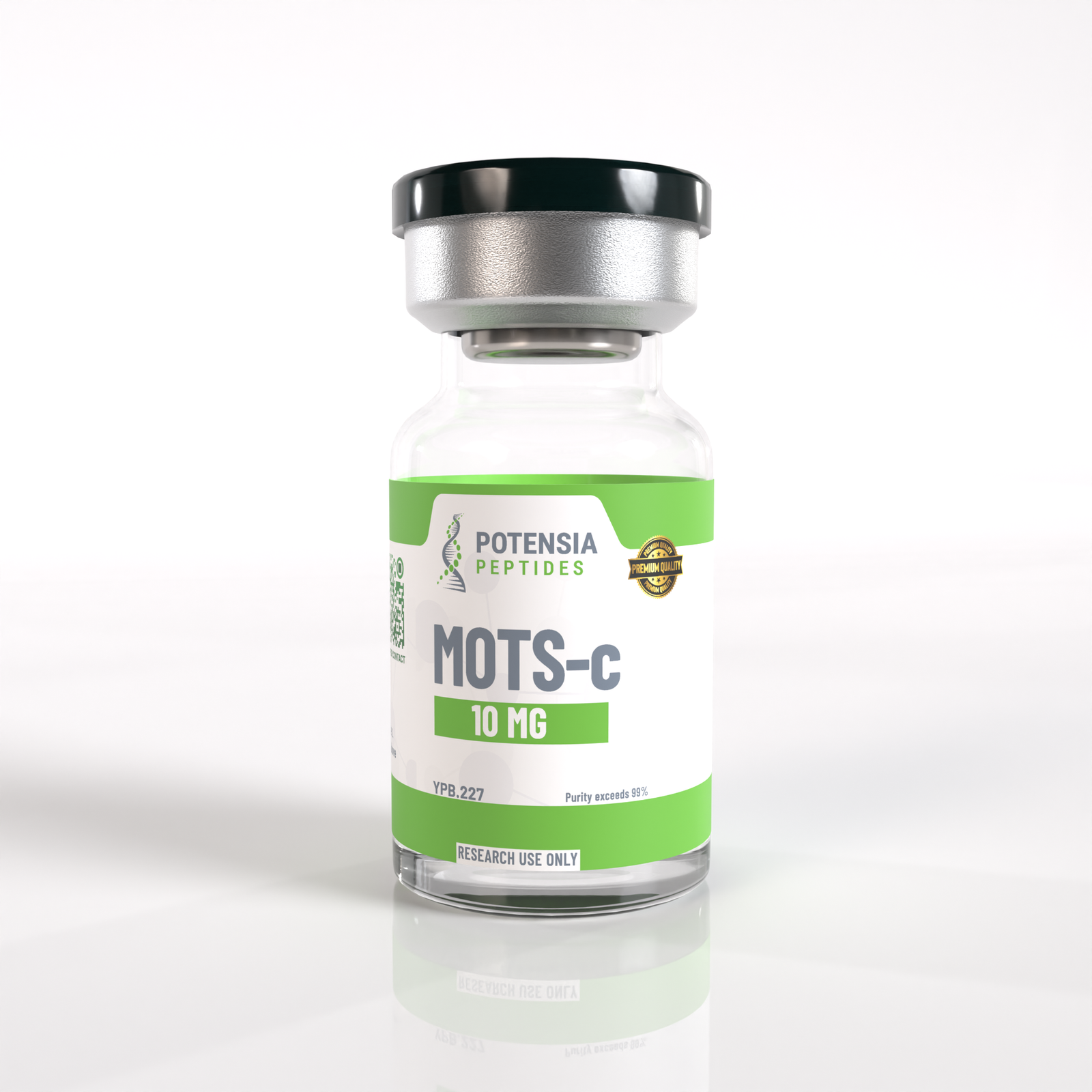
MOTS-c
MOTS-c (Muscle-specific Transcript of Cardiac Sarcomere Protein) is a short peptide derived from mitochondrial transcripts found in skeletal muscle and cardiac tissue. This research-use-only peptide has garnered attention in preclinical studies for its potential role in mitochondrial function, bioenergetics, and cellular homeostasis. Due to its unique biochemical properties, it has been investigated in models exploring muscle physiology, metabolic regulation, and age-related decline.
Research Context
MOTS-c was first identified in the context of mitochondrial gene expression, where it is produced in response to various physiological and pathological stimuli. Unlike many known peptides, MOTS-c is a small, hydrophobic molecule primarily encoded by the mitochondrial genome. Preclinical research has highlighted its involvement in regulating metabolic pathways, including those associated with oxidative phosphorylation, muscle adaptation, and cellular stress responses.
Research Overview
Emerging studies suggest that MOTS-c may influence mitochondrial dynamics, including biogenesis and mitophagy. In animal models, its administration has been associated with improved exercise performance, enhanced muscle resilience, and modulation of systemic metabolic processes. However, further investigation is required to fully elucidate its mechanisms and potential translational applications, as many findings remain within the scope of in vitro and in vivo experiments.
Key Research Focus Areas
- Mitochondrial Function: Investigation of MOTS-c’s role in oxidative metabolism, ATP production, and respiratory efficiency in cultured cells and animal tissues.
- Muscle Physiology: Exploration of its effects on muscle fiber adaptation, recovery, and atrophy resistance, particularly in response to stress or exercise.
- Metabolic Regulation: Examination of MOTS-c’s potential influence on systemic energy homeostasis, including lipid metabolism and glucose tolerance in preclinical models.
- Aging and Cellular Stress: Preliminary studies linking MOTS-c to longevity-related pathways, including autophagy and mitochondrial quality control mechanisms.
- Neuroprotection: Investigations into its potential neuroprotective effects, particularly in models of neurodegeneration or neuroinflammation.
Important Note: All applications of MOTS-c must adhere to strict research protocols, including proper handling, storage, and documentation as per institutional guidelines.
For research use only. Not for human or animal consumption.
| Size | 10MG, 40MG |
|---|


Reviews
There are no reviews yet.