
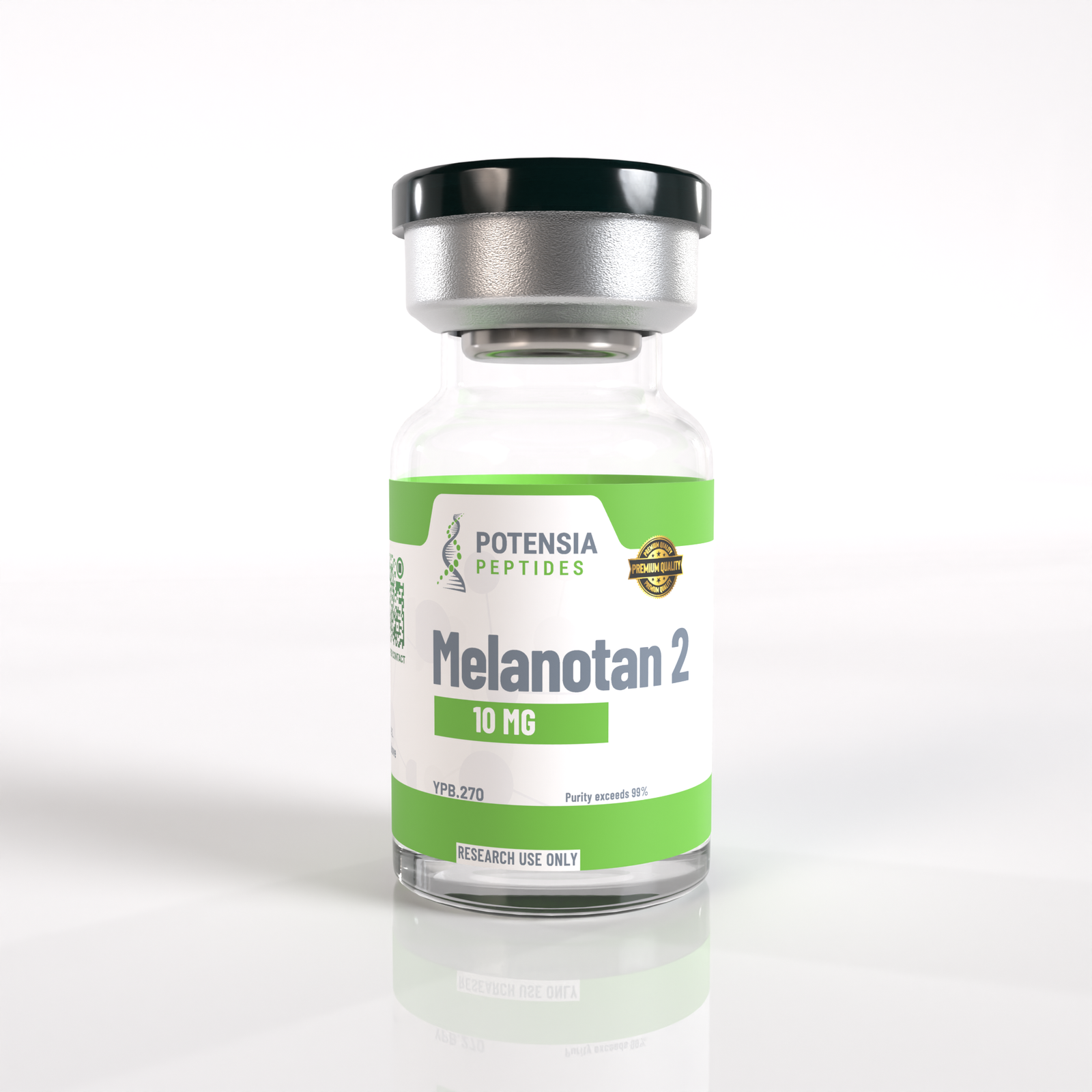
Melanotan 2 (MT-2) 10mg
Melanotan 2 (MT-2) is a synthetic peptide analog of the melanocortin receptor agonist originally identified for its skin-pigmenting effects in laboratory studies. This product is intended exclusively for research applications and is not intended for therapeutic, diagnostic, cosmetic, or any other human or animal use. MT-2 is a decapeptide that mimics the biological activity of alpha-melanocyte-stimulating hormone (α-MSH), binding specifically to melanocortin type IV (MC4) receptors. Due to its potential effects on receptor binding and downstream signaling pathways, MT-2 is frequently studied in preclinical research settings for its role in skin pigmentation, mood modulation, and neuroendocrine regulation.
Research Context
Melanotan 2 has been extensively researched within academic and pharmaceutical circles for its mechanisms of action in skin photoprotection, behavioral responses, and neurobiological effects. Initially developed in the late 1990s for its ability to induce darkening in skin pigmentation, MT-2 has since been explored in diverse scientific disciplines. Its selective receptor affinity for MC4Rs also makes it a model compound for studying melanocortin signaling, which has implications in areas such as appetite regulation, stress responses, and mood-related behaviors. Research has also examined its potential in preclinical models to explore broader neuroendocrine interactions, including effects on serotonin and dopamine pathways.
Research Overview
The primary focus of MT-2 research has revolved around its effects on melanocortin receptor-mediated pathways. When administered in research settings, MT-2 binds to MC4 receptors in a manner distinct from endogenous hormones like α-MSH, leading to measurable physiological outcomes. These include rapid and pronounced skin hyperpigmentation, which has been studied for its potential applications in dermatological research. Additionally, MT-2’s effects on mood and behavior have been investigated in rodent models, where it has been observed to induce tanning responses and alter feeding and stress-related behaviors. Its neuroendocrine profile has also been examined in relation to serotonin modulation, a finding that has implications for understanding its broader biological roles in research contexts.
Key Research Focus Areas
- Melanocortin Receptor Signaling: Investigation of MT-2’s binding affinity and functional effects on MC4 receptors in preclinical models, including its role in skin pigmentation and photoprotection.
- Neuroendocrine Regulation: Exploration of MT-2’s influence on mood, stress responses, and serotonin/dopamine pathways within rodent studies.
- Appetite and Behavioral Effects: Examination of MT-2’s potential role in appetite regulation and behavioral modulation, particularly in controlled research environments.
- Dermatological Research Applications: Evaluation of MT-2’s effects on skin hyperpigmentation and its utility in preclinical dermatological studies.
- Cross-Receptor Mechanisms: Analysis of MT-2’s interactions with other melanocortin receptor subtypes (e.g., MC1R, MC3R) in the context of receptor specificity and downstream signaling.
Important Safety and Compliance Notice
This peptide is intended solely for use in approved research settings under the supervision of qualified personnel. Due to its potent receptor-binding properties, MT-2 may exhibit unpredictable biological effects in uncontrolled environments. Always adhere to institutional guidelines for handling peptides, including proper storage conditions, disposal protocols, and safety protocols for potential biological hazards. Researchers should consult current scientific literature and regulatory guidelines for any updates on its experimental use.
For research use only. Not for human or animal consumption.
Reviews
There are no reviews yet.