
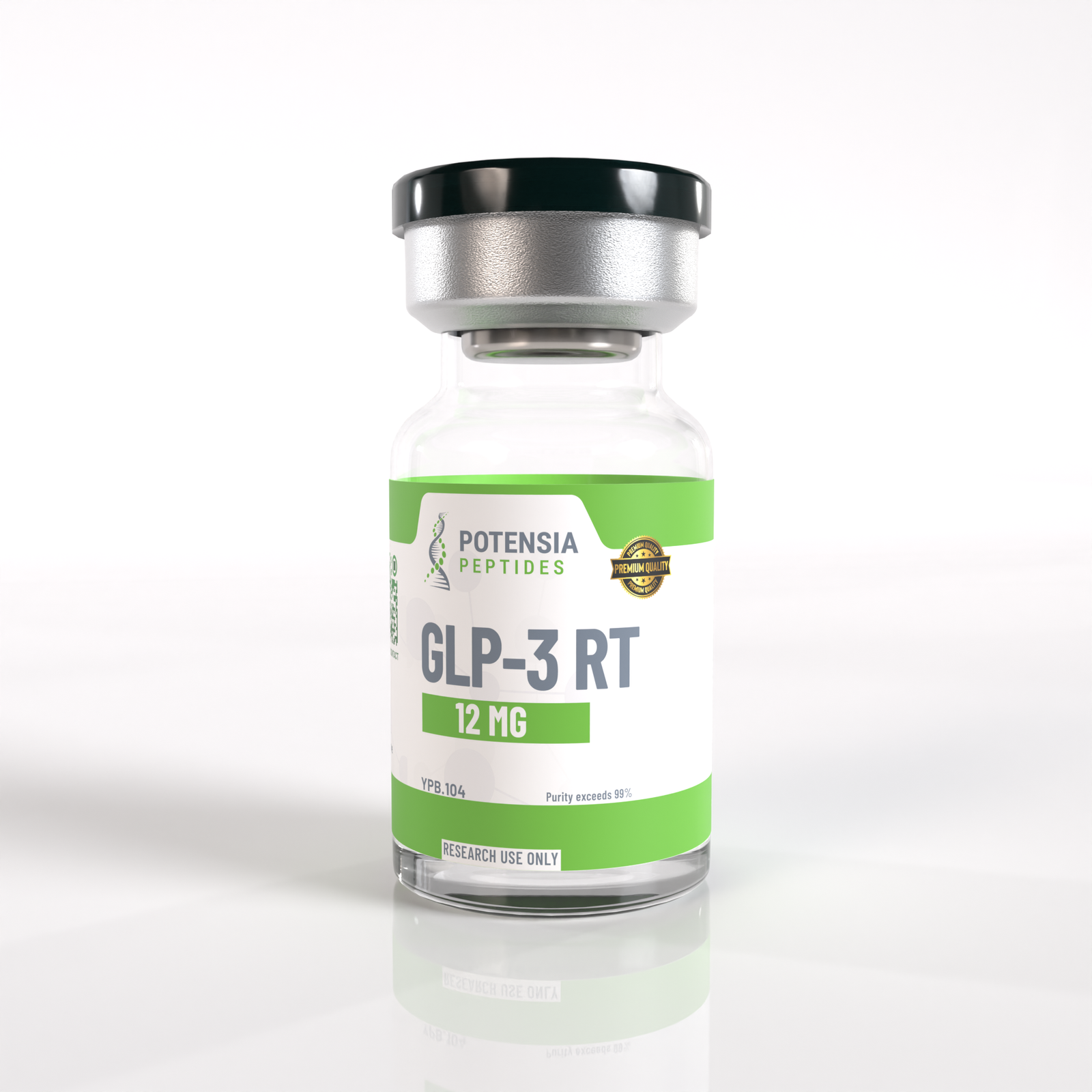
GLP-3 RT Peptide
GLP-3 RT peptide is a synthetic research compound derived from the proglucagon peptide family, a group of hormonally active peptides involved in metabolic regulation and gastrointestinal signaling. Proglucagon-derived peptides are processed in a tissue-specific manner and are known to influence glucose metabolism, digestive function, and energy homeostasis. GLP-3 RT has been developed for experimental applications to investigate these biological pathways under controlled laboratory conditions.
Within the proglucagon system, peptides such as glucagon, GLP-1, GLP-2, and related analogs interact with distinct receptors that modulate endocrine and paracrine signaling. GLP-3 RT is of interest in research settings due to its structural relationship with these peptides and its potential to engage metabolic signaling cascades involved in nutrient sensing, hormonal cross-talk, and cellular energy regulation.
Chemical Makeup
- Peptide Class: Proglucagon-derived research peptide
- Molecular Formula: C###H###N###O### (approximate)
- Molecular Weight: ~3,500–4,500 g/mol (sequence-dependent)
- Other Known Titles: GLP-3 research peptide, GLP-3 RT analog
Research and Experimental Studies
GLP-3 RT and Metabolic Signaling
Proglucagon-derived peptides have been extensively studied for their involvement in metabolic signaling networks regulating glucose homeostasis, lipid metabolism, and energy expenditure. In experimental models, peptides within this family have been shown to influence cyclic adenosine monophosphate (cAMP) production and downstream kinase activation, which may affect cellular metabolic responses. GLP-3 RT has been utilized in laboratory research to explore these signaling mechanisms and their physiological relevance.
GLP-3 RT and Gastrointestinal Hormone Pathways
Research indicates that proglucagon-derived peptides play a role in gastrointestinal hormone regulation by interacting with receptors expressed in the gut, pancreas, and central nervous system. These interactions may influence gastric motility, nutrient absorption, and endocrine feedback loops. GLP-3 RT has been applied in controlled studies to examine its potential role in gut–brain and gut–pancreas signaling pathways.
GLP-3 RT and Energy Homeostasis
Experimental investigations suggest that peptides related to the proglucagon family may modulate energy balance by influencing appetite regulation, insulin sensitivity, and substrate utilization. In preclinical research models, alterations in proglucagon peptide signaling have been associated with shifts in energy expenditure and metabolic efficiency. GLP-3 RT serves as a research tool for examining these complex interactions within metabolic systems.
GLP-3 RT and Cellular Response Modulation
In vitro studies involving proglucagon-derived peptides have demonstrated potential effects on cellular proliferation, differentiation, and stress-response pathways. These effects are thought to be mediated through receptor-dependent signaling cascades such as MAPK and PI3K/Akt. GLP-3 RT has been employed in laboratory environments to further investigate these cellular responses and their downstream implications.
Research Use Disclaimer
GLP-3 RT peptide supplied by Potensia Peptides is intended strictly for laboratory research purposes only. This product is not for human or animal consumption and is not approved for diagnostic, therapeutic, medical, or veterinary use. Purchasers are responsible for ensuring compliance with all applicable laws, regulations, and institutional research guidelines. Please review our Terms and Conditions prior to ordering.
| Size | 10 MG, 24 MG |
|---|

Reviews
There are no reviews yet.