
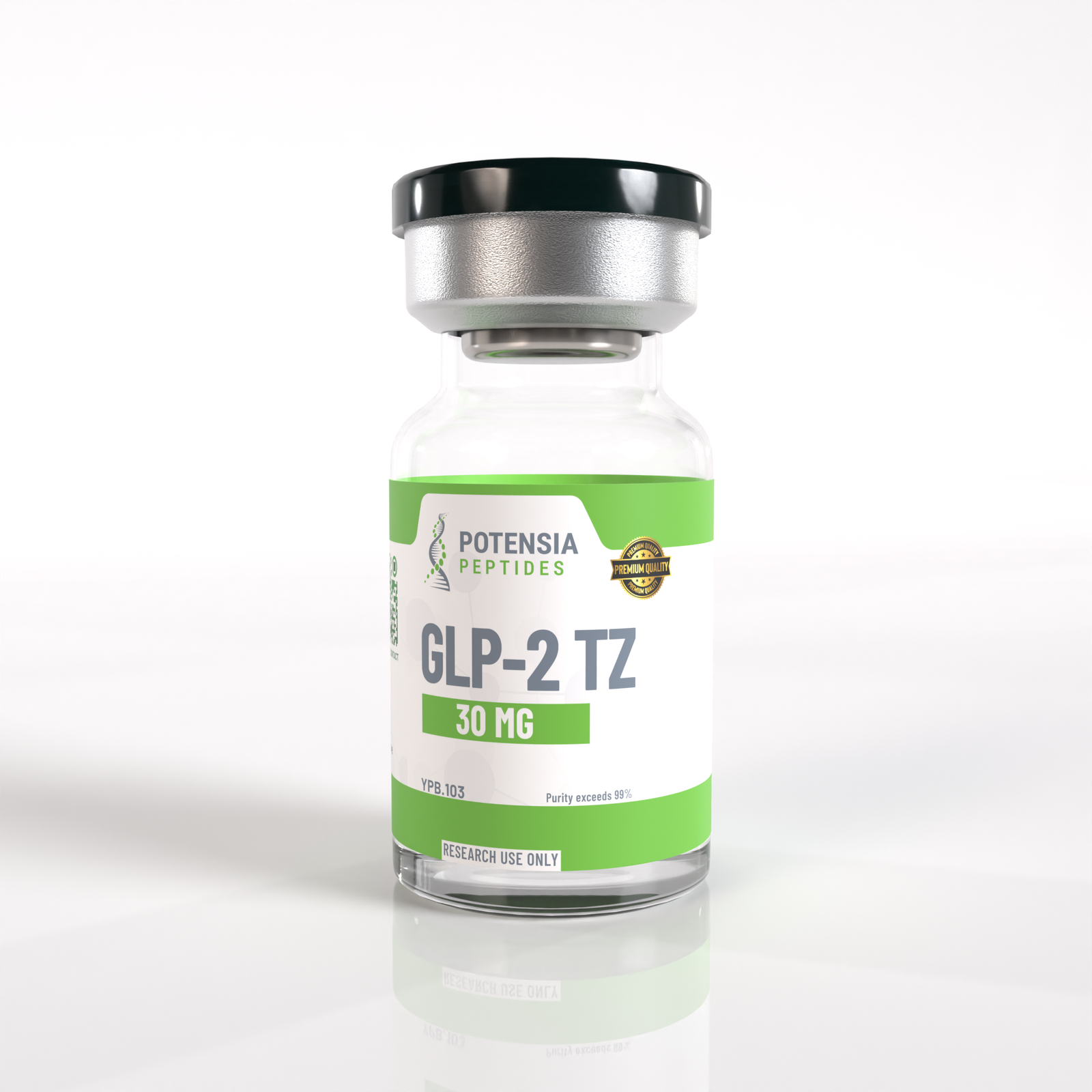
GLP-2 TZ Peptide
GLP-2 TZ peptide is a synthetic analog derived from glucagon-like peptide-2 (GLP-2), an endogenous intestinotrophic hormone secreted by enteroendocrine L-cells in response to nutrient ingestion. GLP-2 is structurally related to glucagon and GLP-1 and is part of the proglucagon-derived peptide family. Research suggests that GLP-2 TZ has been engineered to exhibit enhanced stability and prolonged activity compared to native GLP-2, making it of interest in experimental models investigating gastrointestinal growth, epithelial regeneration, and nutrient absorption pathways.
GLP-2 is known to interact with the GLP-2 receptor (GLP-2R), a G protein–coupled receptor primarily expressed in the gastrointestinal tract. Activation of this receptor appears to initiate signaling casc involving cyclic adenosine monophosphate (cAMP), phosphoinositide 3-kinase (PI3K), and mitogen-activated protein kinase (MAPK) pathways. These pathways are implicated in cellular proliferation, inhibition of apoptosis, and enhancement of intestinal barrier integrity. As a stabilized analog, GLP-2 TZ is widely utilized in research settings to explore these physiological mechanisms under controlled laboratory conditions.
Chemical Makeup
- Peptide Class: GLP-2 analog
- Molecular Formula: C###H###N###O### (approximate)
- Molecular Weight: ~3,800–4,000 g/mol (sequence-dependent)
- Other Known Titles: Stabilized GLP-2 analog, GLP-2 TZ peptide
Research and Experimental Studies
GLP-2 TZ and Intestinal Mucosal Growth
Multiple experimental models have demonstrated that GLP-2 signaling may stimulate intestinal epithelial cell proliferation and crypt expansion while reducing enterocyte apoptosis. In murine and preclinical gastrointestinal injury models, GLP-2 exposure has been associated with apparent increases in villus height, crypt depth, and overall intestinal surface area. These structural adaptations are posited to enhance nutrient absorption efficiency and improve mucosal resilience following inflammatory or chemically induced injury.
GLP-2 TZ, due to its modified structure, has been explored for its prolonged receptor engagement and resistance to enzymatic degradation, particularly dipeptidyl peptidase-IV (DPP-IV). This enhanced stability allows researchers to better assess sustained GLP-2 receptor activation and downstream signaling effects in long-term experimental designs.
GLP-2 TZ and Intestinal Barrier Function
Research suggests that GLP-2 activity may strengthen intestinal barrier integrity by upregulating tight junction proteins such as occludin and claudins. In laboratory models of increased intestinal permeability, GLP-2 receptor activation has been associated with reduced bacterial translocation and decreased inflammatory marker expression. These findings have positioned GLP-2 TZ as a valuable research compound for studying gut barrier physiology and epithelial defense mechanisms.
GLP-2 TZ and Gastrointestinal Blood Flow
Experimental evidence indicates that GLP-2 may enhance splanchnic and intestinal blood flow through nitric oxide–dependent pathways. Increased perfusion is thought to support nutrient delivery and waste removal in intestinal tissues, potentially contributing to mucosal growth and repair. GLP-2 TZ has been employed in controlled research settings to evaluate these vascular responses and their contribution to intestinal homeostasis.
GLP-2 TZ and Inflammatory Modulation
In preclinical inflammatory bowel models, GLP-2 signaling has been associated with apparent reductions in pro-inflammatory cytokine expression and oxidative stress markers. These observations suggest a potential modulatory role of GLP-2 TZ on inflammatory signaling cascades within gastrointestinal tissues, although the precise molecular mechanisms remain under investigation.
Research Use Disclaimer
GLP-2 TZ peptide offered by Potensia Peptides is supplied strictly for laboratory research purposes only. This product is not intended for human or animal consumption and is not approved for use in clinical, diagnostic, therapeutic, or veterinary applications. All purchasers are responsible for complying with applicable laws, regulations, and institutional guidelines governing research chemical usage. Please review our Terms and Conditions prior to ordering.
Reviews
There are no reviews yet.