
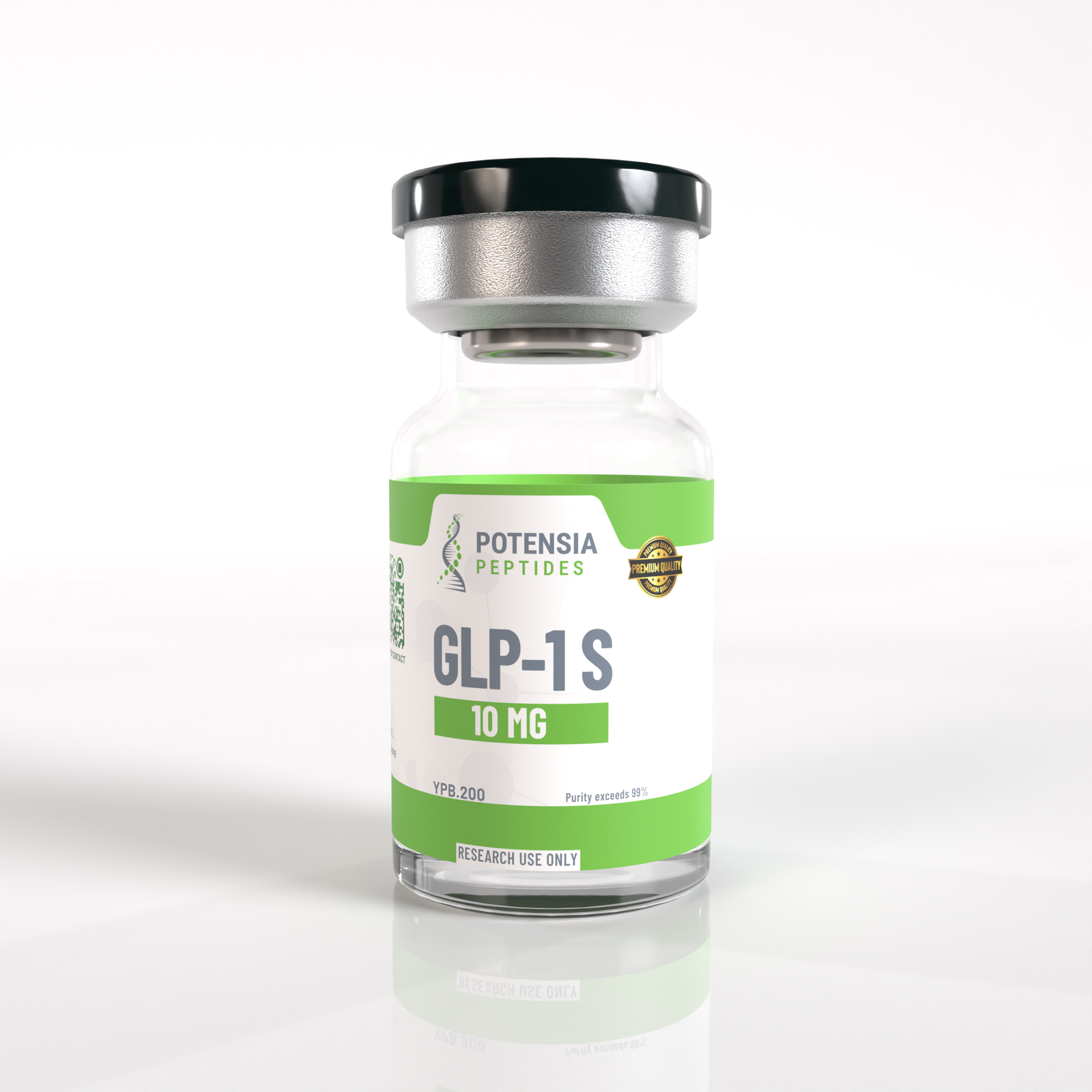
GLP-1 S
GLP-1 S is a peptide derivative under investigation in academic and pharmaceutical research settings. This product is designed for research purposes only and is intended for use in controlled laboratory and preclinical studies. GLP-1 S is part of a broader class of peptides that mimic the glucagon-like peptide-1 (GLP-1) signaling pathway, which plays a critical role in glucose metabolism and satiety regulation.
Research Context
GLP-1 (Glucagon-Like Peptide-1) is a hormone secreted by the intestines in response to food intake. It binds to GLP-1 receptors in pancreatic beta cells, stimulating insulin secretion and reducing glucagon release, thereby improving glucose homeostasis. Research involving GLP-1 and its analogs has been extensively explored for its potential therapeutic benefits in diabetes management. The modification to “GLP-1 S” may involve structural changes aimed at altering pharmacokinetic properties, receptor affinity, or stability compared to native GLP-1.
Research Overview
GLP-1 S is being examined in preclinical studies for its effects on metabolic regulation, appetite control, and potential neuroprotective properties. The peptide’s structural modifications may influence its efficacy, duration of action, or compatibility with various biological systems. Researchers utilize GLP-1 S in models such as rodent studies, cell cultures, and in vitro assays to investigate its mechanisms of action, pharmacokinetics, and safety profile under controlled conditions.
Key Research Focus Areas
- Pharmacokinetics and Metabolism: Evaluation of GLP-1 S’s absorption, distribution, metabolism, and clearance in preclinical models to understand its stability and efficacy profile.
- Receptor Binding and Signaling: Investigation of GLP-1 S’s affinity for GLP-1 receptors and its downstream signaling pathways to assess its functional activity.
- Metabolic Regulation: Assessment of GLP-1 S’s impact on glucose metabolism, insulin secretion, and glycemic control in animal or cell-based studies.
- Neuroprotective and Appetite-Related Effects: Exploration of potential effects on satiety, food intake regulation, and neuroprotective mechanisms in preclinical settings.
- Safety and Toxicity: Comprehensive toxicological evaluations, including dose-response studies and long-term exposure assessments, to ensure the peptide’s safety in research applications.
Important Compliance Statement
This product is for research use only and is intended exclusively for use in accredited academic or institutional research facilities. It is not intended for human or animal therapeutic, diagnostic, or cosmetic purposes. Users must adhere to all applicable regulatory guidelines, ethical standards, and safety protocols during handling and experimentation. Responsibility for proper use lies solely with the researcher. Failure to comply with these conditions may result in legal or regulatory action.
| Safety Note | Storage Instructions |
|---|---|
| Safety Precautions: Handle with care in a certified biosafety laboratory. Avoid inhalation, ingestion, or skin/mucous membrane exposure. Proper personal protective equipment (PPE) should be worn during handling. | Storage Conditions: Store at -20°C or lower until use. Avoid freeze-thaw cycles. Protect from light and moisture. Do not store for longer than the expiry date if applicable. |
For research use only. Not for human or animal consumption.
| Size | 10MG, 20MG, 30MG |
|---|
Reviews
There are no reviews yet.