
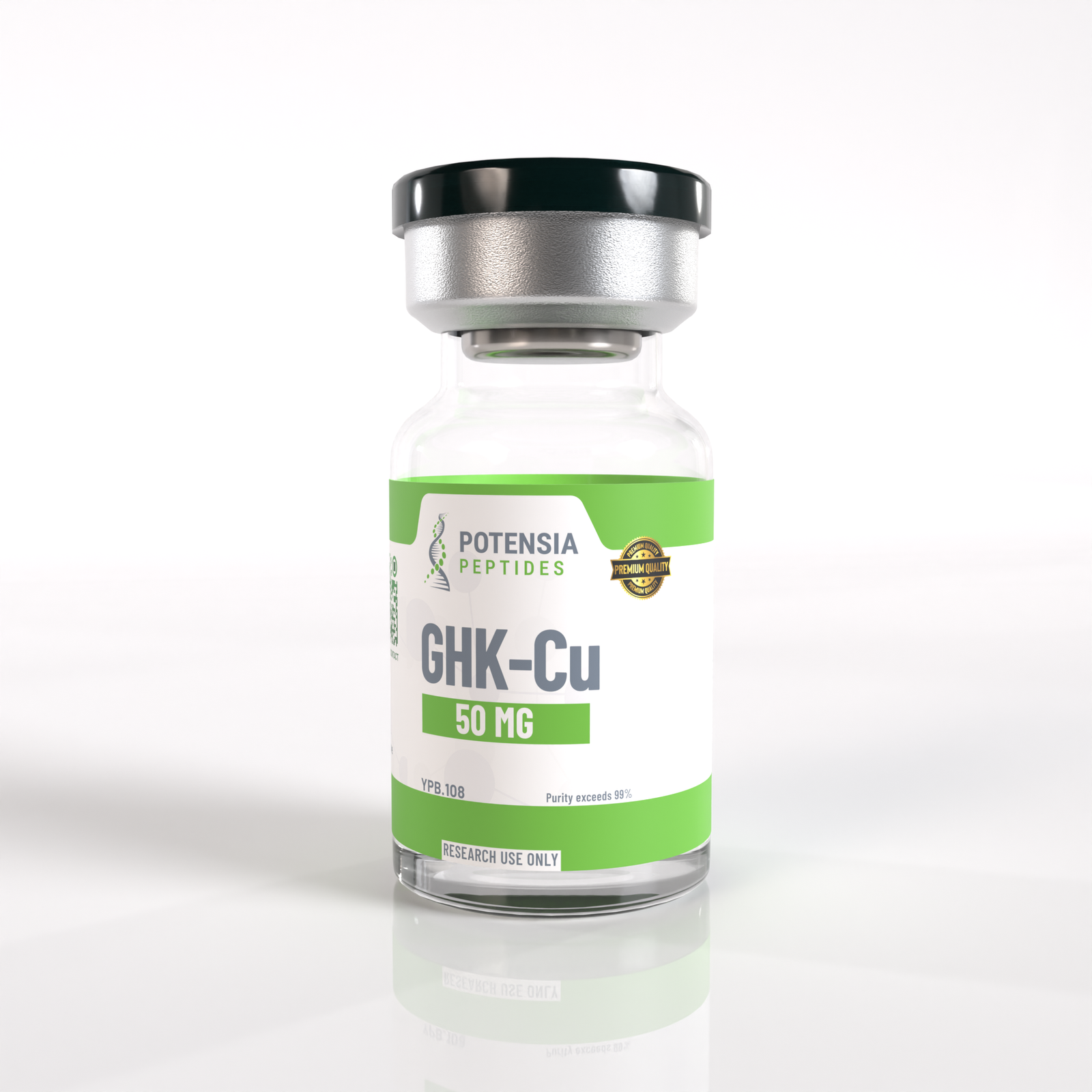
GHK-Cu Peptide
GHK-Cu (Glycyl-L-histidyl-L-lysine–copper) is a naturally occurring copper-complexed tripeptide originally identified in human plasma, saliva, and urine. It forms when the tripeptide GHK chelates a copper (II) ion, creating a biologically active complex that has been extensively studied in laboratory and preclinical research settings. Due to its small molecular size and metal-binding properties, GHK-Cu has attracted scientific interest in cellular communication, gene expression, and tissue signaling investigations.
The peptide is known for its high affinity for copper ions, which play a critical role in numerous enzymatic and redox reactions. In research environments, GHK-Cu has been explored for its potential involvement in regulating cellular homeostasis, oxidative stress pathways, and extracellular matrix dynamics. Potensia Peptides supplies GHK-Cu exclusively for controlled laboratory and in vitro research applications.
Chemical Makeup
- Peptide Class: Copper-binding tripeptide
- Molecular Formula: C14H22N6O4Cu
- Molecular Weight: ~401.9 g/mol
- Sequence: Gly-His-Lys (GHK) complexed with Cu2+
- Other Known Titles: Copper tripeptide-1, GHK copper peptide
Research and Experimental Studies
GHK-Cu and Cellular Signaling Pathways
GHK-Cu has been widely investigated for its apparent influence on cellular signaling networks involved in gene regulation and intracellular communication. In vitro studies suggest that the peptide–copper complex may interact with pathways associated with transcriptional regulation, growth factor signaling, and cellular stress responses. These properties have made GHK-Cu a frequently studied compound in molecular and cellular biology research.
GHK-Cu and Extracellular Matrix Research
Research indicates that GHK-Cu may influence extracellular matrix (ECM) dynamics by modulating the expression of structural proteins such as collagen, elastin, and proteoglycans in experimental models. Studies have also explored its interaction with matrix metalloproteinases (MMPs) and tissue inhibitors of metalloproteinases (TIMPs), which play a role in ECM remodeling and tissue architecture.
GHK-Cu and Oxidative Balance Studies
Copper ions are essential cofactors in antioxidant enzymes such as superoxide dismutase (SOD). GHK-Cu has been evaluated in laboratory research for its potential role in regulating redox-sensitive pathways and mitigating oxidative stress markers at the cellular level. These investigations focus on understanding how copper-peptide complexes may contribute to maintaining cellular oxidative balance.
GHK-Cu and Tissue Signaling Research
In experimental tissue models, GHK-Cu has been studied for its apparent effects on fibroblast activity, cellular migration, and intercellular signaling. These properties have positioned the peptide as a valuable research tool for examining tissue-level communication and adaptive cellular responses under controlled experimental conditions.
Research Use Disclaimer
GHK-Cu peptide supplied by Potensia Peptides is intended strictly for laboratory research purposes only. This product is not approved for human or animal consumption and is not intended for medical, diagnostic, therapeutic, cosmetic, or veterinary use. Purchasers are responsible for ensuring compliance with all applicable laws, regulations, and institutional research guidelines. Please review our Terms and Conditions prior to ordering.
| Size | 10 MG, 24 MG |
|---|
Reviews
There are no reviews yet.