
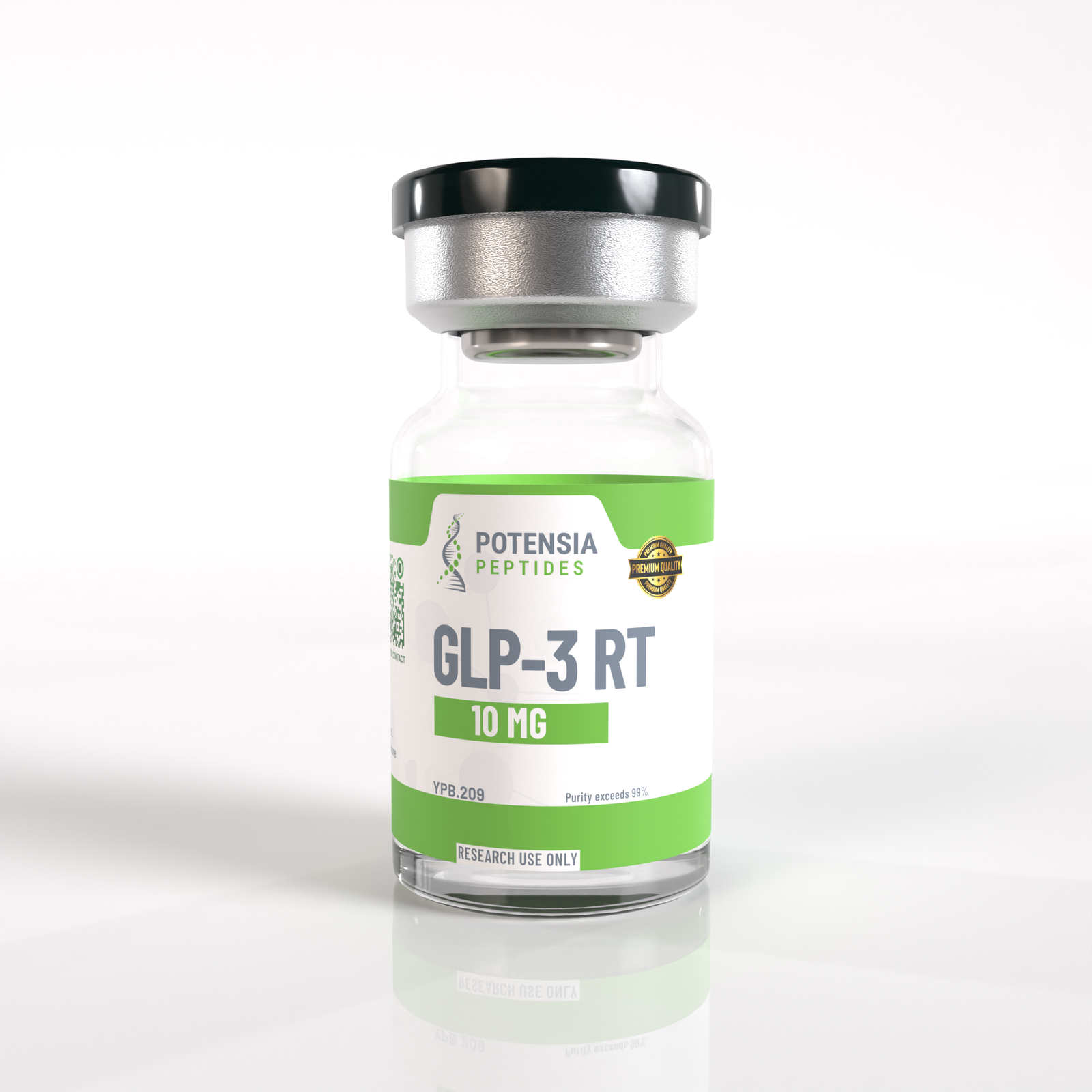
GLP-3 RT
GLP-3 RT is a research-use-only peptide designed for academic and scientific investigations in pharmacological, biochemical, or biological research applications. This peptide is synthesized for experimental studies related to gastrointestinal function, peptide receptor biology, and potential mechanisms of action within controlled laboratory settings.
Research Context
GLP-3 (Glucagon-Like Peptide-3) is a naturally occurring hormone that plays a critical role in gastrointestinal physiology, including regulation of appetite, gastric emptying, and intestinal motility. GLP-3 RT serves as a research tool to explore modifications, interactions, and functional effects associated with GLP-3 and related receptor systems. This peptide is intended for use in experiments where the precise characterization of peptide behavior is necessary, such as receptor binding assays, pharmacological profiling, or mechanistic studies in in vitro or in vivo models.
Research Overview
GLP-3 RT is intended for research purposes to facilitate investigations into the biochemical, pharmacological, and physiological properties of GLP-3. Researchers may utilize this peptide to study its role in receptor-mediated signaling pathways, potential applications in disease modeling (such as metabolic disorders or gastrointestinal dysfunction), or development of peptide-based therapeutic analogs. This peptide is not intended for clinical, diagnostic, or therapeutic evaluation in humans or animals. Its use must comply with all applicable research regulations and institutional guidelines.
Key Research Focus Areas
- Gastrointestinal Physiology: Exploration of GLP-3’s effects on gastric motility, intestinal secretion, and overall gastrointestinal homeostasis in controlled experimental models.
- Peptide Receptor Binding Studies: Investigation of GLP-3 receptor affinity, specificity, and signaling dynamics through binding assays or cellular assays.
- Pharmacological Profiling: Assessment of peptide stability, degradation pathways, and potential modifications to enhance or alter its biological activity in vitro or in vivo.
- Mechanistic Research: Characterization of downstream signaling cascades or molecular interactions associated with GLP-3 signaling pathways.
- In Vitro and In Vivo Models: Application in cell-based assays, animal studies, or organoid cultures to evaluate peptide behavior under defined conditions.
Caution: This peptide is intended solely for research purposes and should be handled with care in accordance with laboratory safety protocols. Researchers must adhere to institutional guidelines, ethical standards, and regulatory requirements for its use.
For research use only. Not for human or animal consumption.
| Size | 10MG, 20MG, 30MG, 40MG, 50MG |
|---|



Reviews
There are no reviews yet.