
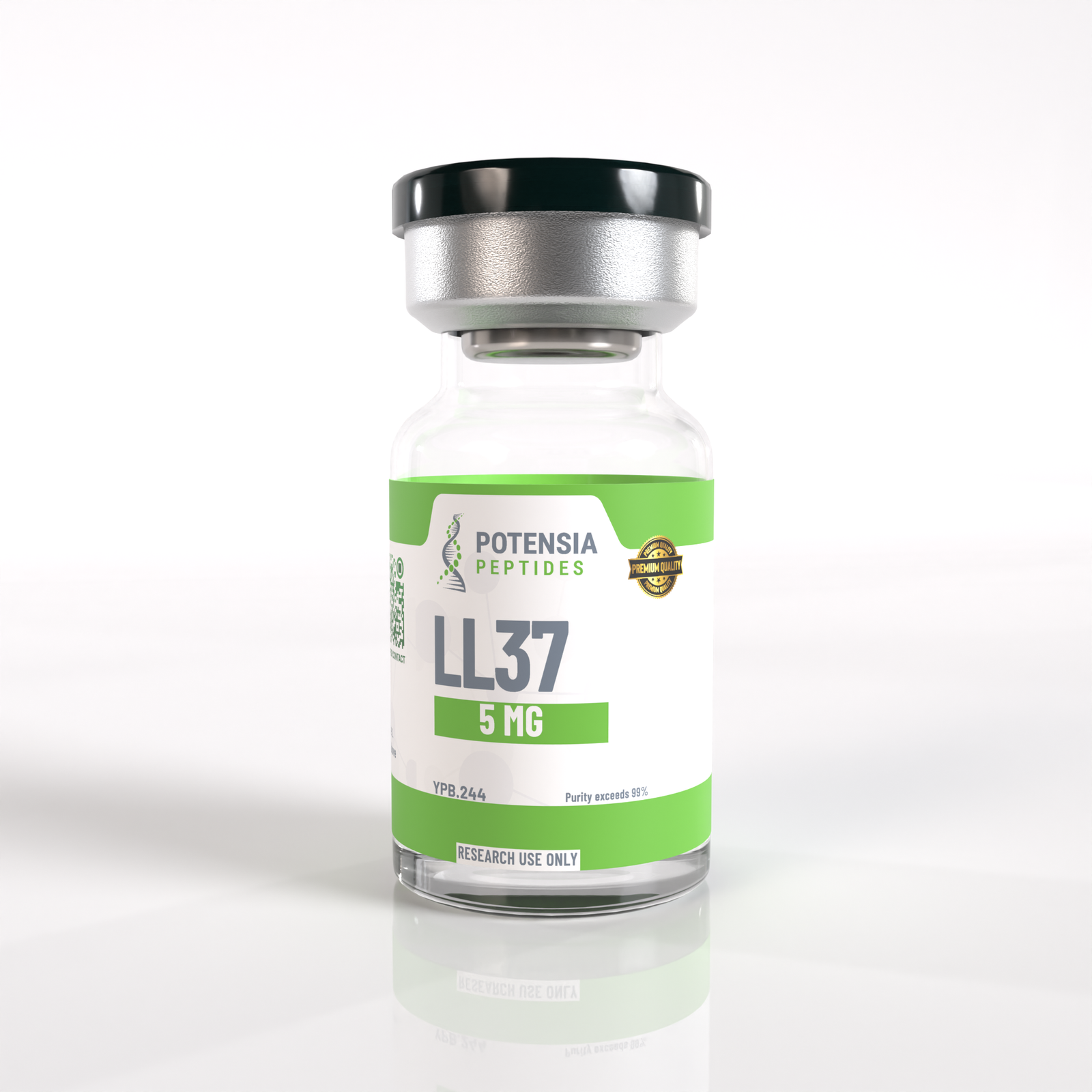
LL37 5mg
LL37 is a synthetic peptide derived from the human cathelicidin antimicrobial protein. This product is provided solely for research purposes under strict adherence to regulatory guidelines.
Research Context
LL37 is one of the most well-characterized antimicrobial peptides found in human body fluids, including blood, saliva, and skin. It plays a crucial role in host defense mechanisms by directly inhibiting a wide range of gram-positive and gram-negative bacteria, fungi, and some viruses. Research has explored its potential applications in antimicrobial studies, but its use remains confined to laboratory and academic environments due to its specialized role in immune response investigation.
Research Overview
LL37 is synthesized from the amino acid sequence LLGDFFRKS. Its primary biological function involves membrane disruption and the formation of pores that compromise microbial viability. Studies have highlighted its effectiveness against pathogenic organisms, including multidrug-resistant strains, making it an area of interest in antimicrobial resistance research. However, its application is strictly limited to research settings where proper containment and safety protocols are maintained.
Key Research Focus Areas
- Antimicrobial activity against a broad spectrum of pathogens, including resistant bacterial strains.
- Investigations into LL37’s role in innate immune response mechanisms and its potential as a therapeutic agent in antimicrobial research.
- Structural and functional studies on LL37’s interaction with lipid membranes and its mechanism of antimicrobial activity.
- Exploration of LL37’s effects on biofilm formation and its potential implications in infectious disease modeling.
- Comparison with other cathelicidin peptides in terms of efficacy, specificity, and safety in experimental conditions.
Safety and Compliance
LL37 is provided in a lyophilized form suitable for reconstitution in research-grade solvents. When handled, strict adherence to biosafety protocols is essential. The product should be stored at temperatures between 2°C and 8°C to maintain stability, and any remaining material should be disposed of according to laboratory waste guidelines. Researchers must ensure proper documentation of use in compliance with institutional policies and applicable regulations.
For research use only. Not for human or animal consumption.
Reviews
There are no reviews yet.