
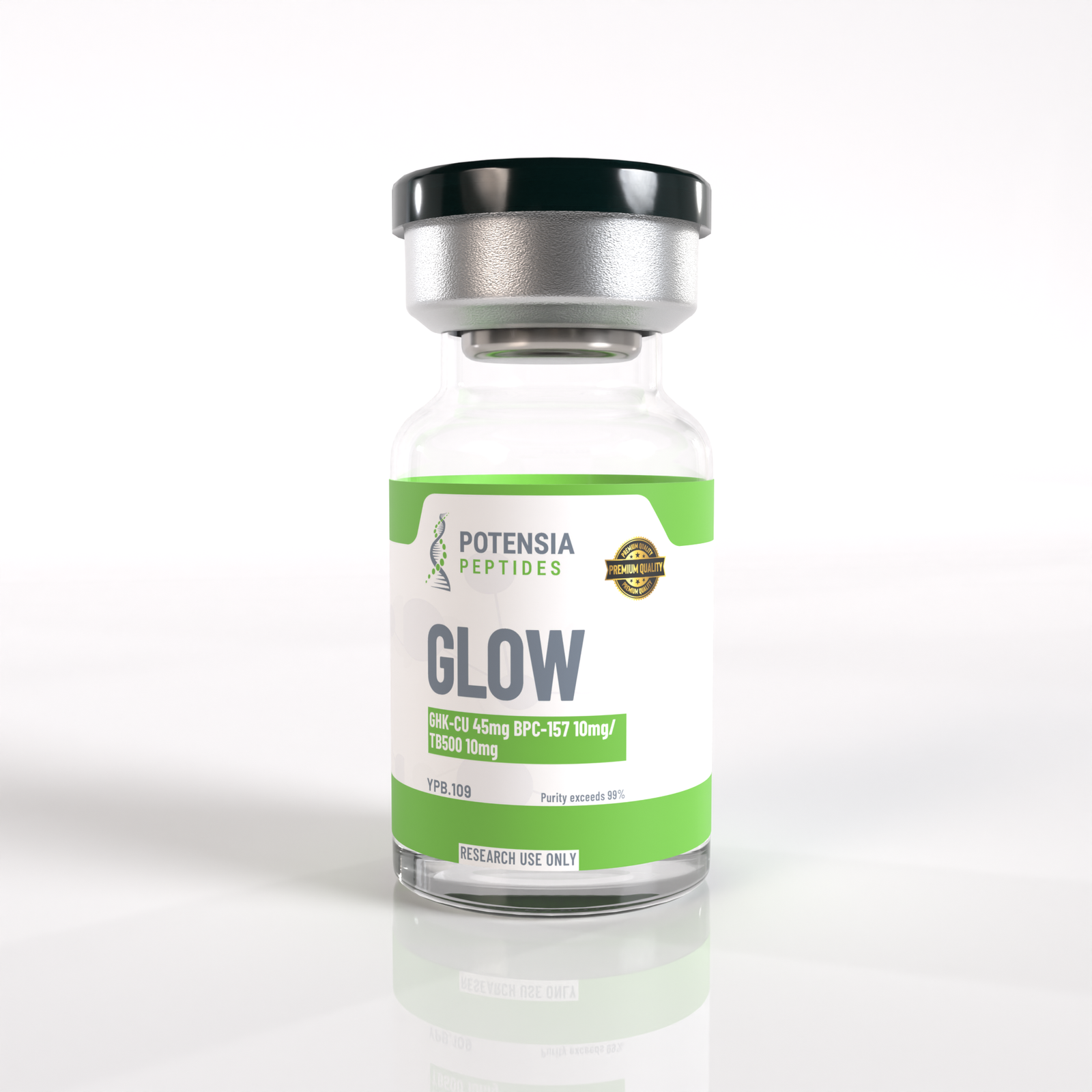
GLOW Peptide
GLOW peptide is a synthetic research compound developed for experimental investigation into cellular signaling, oxidative stress modulation, and peptide–cell interaction mechanisms. In laboratory environments, peptides of this classification are commonly explored for their potential influence on redox balance, cellular protection pathways, and intracellular communication. GLOW is designed exclusively for research applications and is not intended for therapeutic, diagnostic, or cosmetic use.
Peptides involved in oxidative balance research are of interest due to their potential interactions with reactive oxygen species (ROS), antioxidant defense systems, and cellular stress-response signaling networks. GLOW peptide has been utilized in controlled experimental settings to evaluate how peptide-based molecules may influence cellular homeostasis under oxidative or metabolic stress conditions.
Chemical Makeup
- Peptide Class: Synthetic research peptide
- Molecular Formula: C###H###N###O### (approximate)
- Molecular Weight: ~1,000–2,500 g/mol (sequence-dependent)
- Other Known Titles: GLOW research peptide
Research and Experimental Studies
GLOW and Oxidative Stress Pathways
Oxidative stress is a key area of investigation in cellular biology, as excessive reactive oxygen species may disrupt protein structure, lipid membranes, and nucleic acids. Research peptides studied in this domain are often evaluated for their ability to interact with antioxidant signaling pathways or influence intracellular redox balance. GLOW peptide has been explored in laboratory models assessing oxidative markers, cellular viability, and stress-induced signaling responses.
GLOW and Cellular Signaling Modulation
Peptide-based molecules are known to participate in diverse signaling pathways, including those mediated by kinase activation, transcription factor regulation, and intracellular messenger systems. In vitro studies involving peptides similar to GLOW have suggested potential modulation of pathways such as MAPK and PI3K/Akt, which are associated with cellular adaptation and survival mechanisms. GLOW peptide serves as a research tool for examining these signaling dynamics under controlled experimental conditions.
GLOW and Cellular Integrity Research
Experimental models investigating cellular integrity often focus on membrane stability, mitochondrial function, and protein homeostasis. Research peptides may be applied to observe changes in cellular morphology, metabolic activity, and stress resilience. GLOW peptide has been incorporated into such studies to support investigations into peptide–cell interactions and intracellular response mechanisms.
GLOW and Redox Homeostasis Studies
Redox homeostasis plays a critical role in maintaining normal cellular function. Disruptions to this balance are frequently examined in laboratory models of metabolic and environmental stress. GLOW peptide has been evaluated in experimental settings to assess its interaction with redox-sensitive pathways and intracellular antioxidant systems, although further research is required to fully characterize these effects.
Research Use Disclaimer
GLOW peptide supplied by Potensia Peptides is intended strictly for laboratory research purposes only. This product is not approved for human or animal consumption and is not intended for medical, diagnostic, therapeutic, or cosmetic applications. All purchasers are responsible for compliance with applicable laws, regulations, and institutional research guidelines. Please review our Terms and Conditions prior to ordering.
| Size | 10 MG, 24 MG |
|---|
Reviews
There are no reviews yet.