
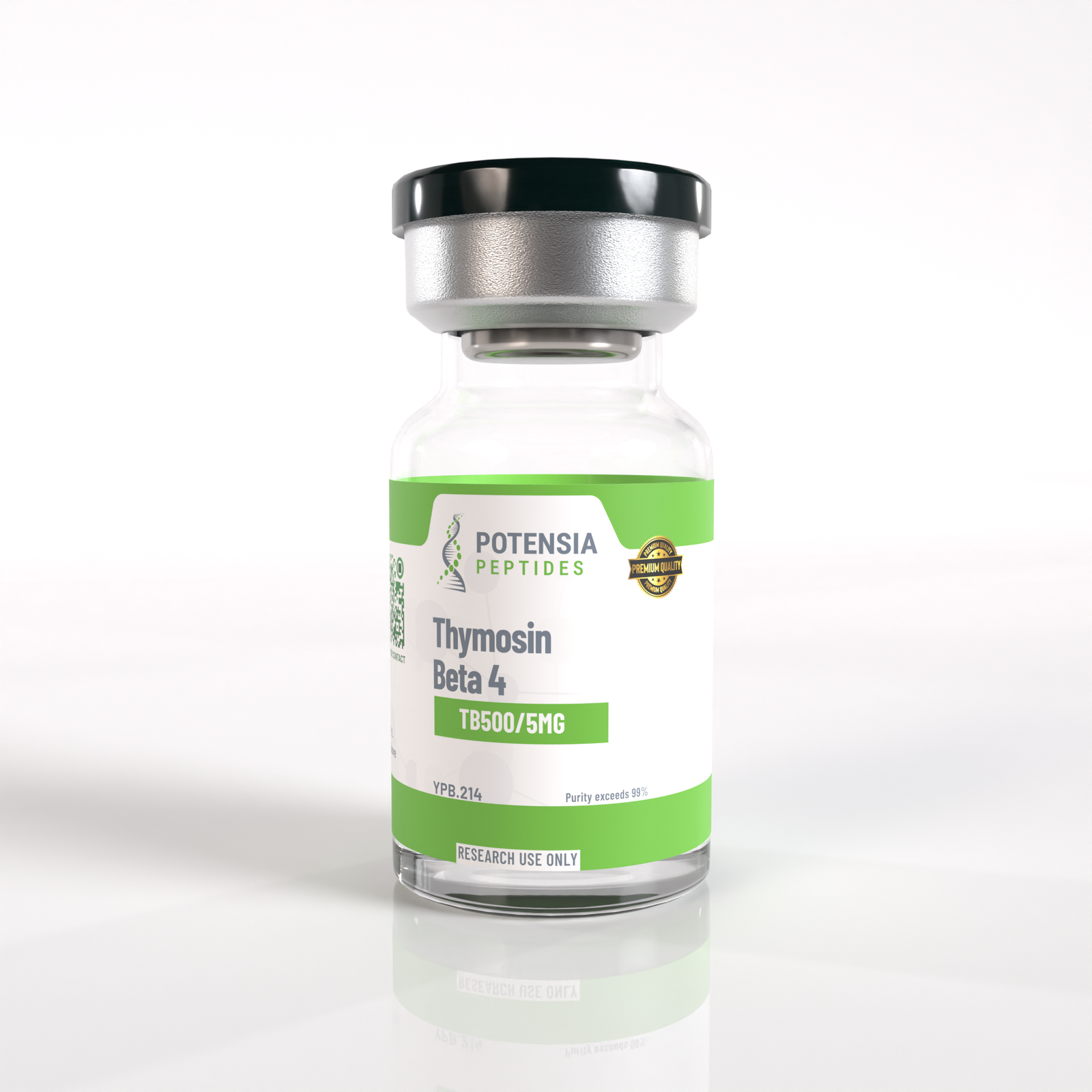
THYMOSN BETA 4
THYMOSN BETA 4 is a synthetic peptide designed for research applications involving thymosin beta-4 (Tβ4) signaling pathways. This peptide is structurally derived from naturally occurring Tβ4, which plays a pivotal role in cellular processes, including wound healing, extracellular matrix remodeling, and immune modulation. Its inclusion in research studies is intended to facilitate exploration of mechanisms related to tissue regeneration, inflammatory response modulation, and protein interaction dynamics.
Research Context
Thymosin beta-4 (Tβ4) is a small peptide hormone originally isolated from the thymus gland. Extensive in vitro and in vivo studies have demonstrated its physiological importance in biological systems, including its ability to reduce inflammation, promote tissue repair, and enhance cellular adhesion. Over the years, synthetic analogs, including THYMOSN BETA 4, have been developed to maintain or modulate these activities while providing greater experimental stability.
Research Overview
THYMOSN BETA 4 is engineered to closely resemble the natural sequence of thymosin beta-4, enabling targeted interaction with Tβ4 receptors and downstream signaling pathways. Its primary application in research involves investigating the biochemical properties of Tβ4, such as its role in modulating cytoskeletal dynamics, extracellular matrix stabilization, and immune cell function. Studies may also explore its potential use in preclinical models for conditions associated with disrupted tissue homeostasis, such as chronic wounds or neurodegenerative diseases.
Key Research Focus Areas
- Cellular signaling and receptor binding studies
- Extracellular matrix remodeling and tissue repair mechanisms
- Immune response modulation and inflammation reduction
- Investigations into wound healing kinetics and scar formation
- Analyses of protein-protein interactions in Tβ4 pathways
- Preclinical modeling of disease-related tissue dysfunction
Due to its potential experimental utility, THYMOSN BETA 4 is provided exclusively for use in academic, industrial, or institutional research environments. This peptide must be handled with the same caution as any biological reagent to ensure safety and reproducibility of results.
For research use only. Not for human or animal consumption.
| Size | 10MG, 5MG |
|---|
Reviews
There are no reviews yet.